
Meet the Jurors of Quilt Visions 2026
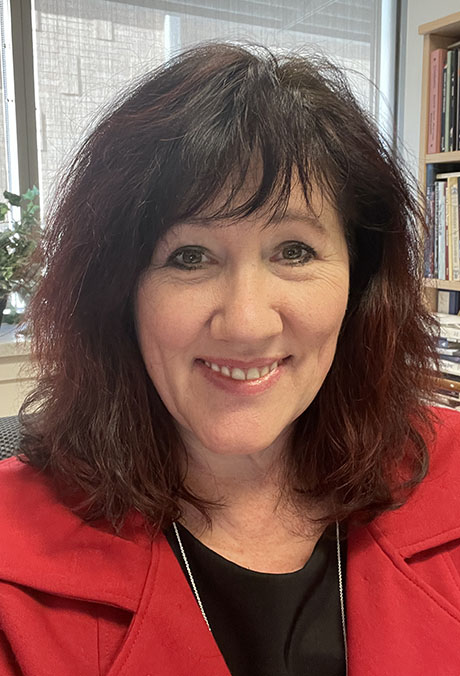
Carolyn Ducey
Carolyn Ducey recently retired as the Ardis B. James Curator of Collections at the International Quilt Museum (IQM) at the University of Nebraska-Lincoln. She now oversees special projects.
Ducey curated numerous exhibitions and contributed to An Evolving Vision: The James Collection, 1997-2022, (2022) and American Quilts in the Industrial Age: 1760-1870 (2018).
She earned a master's degree from Indiana University and a doctorate from the University of Nebraska-Lincoln.
Carolyn's Statement
It was an extraordinary experience, as a juror in the Quilt Visions 2026 Biennial, to consider more than three hundred submissions. All the works submitted showed creativity, dedication, vulnerability, and heart. Weeks later, pieces are still reverberating in my mind's eye.
I was drawn to Valerie Maser-Flanagan's piece, Color Gradations #2, with vertical stacks of rich colors overlapping and crossing to give depth to the quilt's surface. Karen Stone, with Kelp is On the Way, also used layered forms to create a deep space and swaying movement, emphasized by linear quilting that traced the various shapes. In contrast, the simplicity of Phil Jones' composition, Yellow Haze, also resonated for me. A close look revealed the elements that Jones used to create the dynamic yet calm image: a variety of colors used in the quilting stitches, the painted edges that blur the gradations of color, and the mottled surface softening the brilliant yellow.
Many artists incorporated rich patterning: Vicki Conley created an amazing array of patterning in her piece, Bates Cairn #2. The triangular line that she repeats throughout the quilt leads your eye around the quilt in a fluid motion. Strata 4 by Niraja Lorenz incorporates strip piecing and adds texture to the vertical lines by reversing the sewn strips.
Unique materials used in many artists' works brought expressive qualities to the work. Charred Beauty by Leilani Purvis told a story of beauty through loss that was evident before reading the artist's statement. Mending America by Libby Williamson, composed of American flags in tatters, also holds an unmistakable message of protest and hope, that particularly resonates this year as we celebrate the complex history of our democracy. The audacity of Anne Wu's Lint Pods emphasizes how far the quilt medium can be stretched. The simple grid of her piece contrasts with the clumps of fibers, pet lint, and wadded threads within each pod, revealing a personal glimpse of everyday life. So many more pieces deserve attention. Quilt Visions 2026 is an exciting glimpse of styles, materials, and techniques that will amaze and delight viewers.
Thank you to my fellow jurors David van Buskirk and Justin Yong for their insight and knowledge.
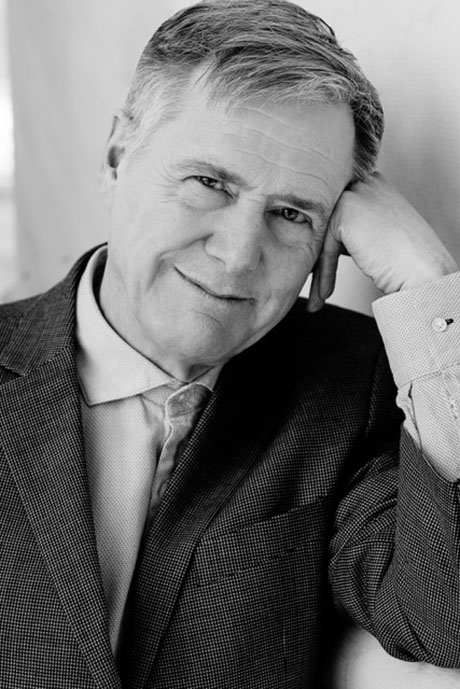
David van Buskirk
For over three decades I worked as a design director for major U.S. textile manufacturers, and in 1997 I formed my own independent textile design firm in NYC. My designs have been included in the collections of Knoll and Design Tex and featured in publications such as Interior Design and Elle Décor.
My handwoven fiber artworks have been presented in numerous exhibitions including Handweavers Guild of Boulder, Colorado, (Juror's Choice Award 2019); the Rocky Mountain Biennial (Honorable Mention 2020); Colorado's Art of the State Triennial 2022; and Complexity 2022: Innovations in Weaving;" in 2023, Fantastic Fibers International Juried Exhibition, the American Tapestry Alliance's Biennale 14, and Men Running with Scissors; in 2024, By Hand:, "Craft Forms 2024 29th International Juried Exhibition of Contemporary Fine Craft. My first solo exhibition VÄFT (Woven) was on display from March 3-May 5, 2025, in the Gallery of Handarbetes Vänners, in Stockholm, Sweden.
I completed a Bachelor of Arts degree with advanced studies at the Swedish Textile Institute and at Handarbetets Vänners Vävskola (Stockholm).
David’s Statement
As a fabric designer and weaver (rather than a quilter), I found it quite exciting to discover the dizzying variety of artistry and imagination reflected in the many outstanding submissions received for VMOTA’s Quilt Visions 2026.
Consider two distinctive entries that exemplify this stylistic diversity: Dianne Firth’s Flow #7 and Barbara Oliver Hartman’s Headed for the Light. The former work conveys fluidity of movement through smooth precision with hard edges, while the latter work utilizes recycled fragments of fabric discards in what its artist described as “free motion” applique to produce deeply textured surfaces from which irregular, chromatically variegated forms coalesce.
A significant number of the submitted works sought to push the boundaries of what a quilt could be. Brent McGee’s Apollo and Phyton exaggerated traditional techniques to create a multi-dimensional artwork that defies its wall-mounted woven backing surface in foregrounding serpentine protrusions into the viewer’s frontal space. Libby Williamson’s Mending America uses traditional quilting techniques to translate her experience of America’s current depredations through a distressed, layered composition whose formal transgressions serve as a statement of protest as well as a metaphor of hope for the future. Turning the fundamental idea of a quilt on its head, Anne Wu’s Lint Pods combines dryer lint, pet hair, and other humble detritus into a gridded, Tetris-like composition, layering a padding between two layers joined together with plastic and flotsam.
As a reflection of the artist’s life, working piece by piece, stitch by stitch, quilting can be a painstaking process. While Sharon Casey’s Fire Inside immediately caught my attention with its chromatic vibrancy and subtle contrasts in its nested angular forms, I learned through the artist’s statement that what initially suggested a joyous explosion was actually a creatively therapeutic expression, channeling the artist’s anger and agony at having to endure the lived experience of chronic physical pain.
I was also particularly struck by Jo-Ann Morgan’s La Frontera, whose inventive piecing of batik fabric to evoke the flow of tears on the grieving faces of its four female figures against a background of supple horizontal stripes in the colors of “Old Glory” effectively conveys the collective experience of migrants whose search across borders for refuge and opportunities for a better life is met with violence.
I was deeply inspired by the artworks submitted and trust that Quilt Visions 2026 will inspire fiber artists to further explore and expand their expressive visions through quilting.
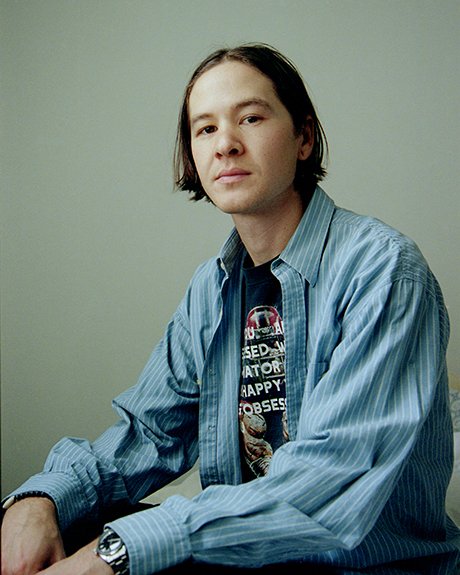
Justin Ming Yong
Justin Ming Yong (b. 1989) is a visual artist who lives and works in Toronto, Canada. Yong explores modern abstractions of quilt–making and improvised textile compositions that destabilize the fictional boundaries between traditional craft and contemporary art. He contemplates the functions of mixed fibers, found materials, irregular patterns, and structure to create pieces that disrupt conventional expectations. Influenced by legacy and lineage grounded in a family tradition of quilting, Yong reflects on his ancestral continuum through themes of forgotten landscapes, cherished traditions, and exploited histories. In his most recent exhibition at the Museum of Contemporary Art, Toronto (2025), Yong transformed their elevators into an immersive, site-specific installation that recontextualized craft and quilting within the public realm. Other notable shows include a solo exhibition at The National Quilt Museum, Paducah, USA (2023) and group shows at Daniel Faria Gallery, Toronto; The Zülfü Livaneli Cultural Center, Ankara, Turkey; Cambridge Art Galleries, Ontario, Canada; Art Gallery of Guelph, Ontario; and The Plumb, Toronto.
Justin's Statement
When a jury curates select works to be part of an exhibition in which the theme is based on a medium (quilting in this case), a priority should be to represent diverse techniques and the range of creative methods that best showcase what is currently happening within that medium. Reviewing hundreds of submissions that interpreted the craft form in different ways made the decision challenging, but the 30+ works that were chosen to be part of this exhibition are a cohesive snapshot of quiltmaking today. As you flow through the museum from work to work, audiences can identify diverse compositions of traditional, abstract, realism, and sculptural. While quilters have been using found materials in their practice for years, there are some items used in this year's exhibition that keep that tradition fresh and ever evolving. One such example is Wen Redmond's Beyond the Abby Window, which includes recycled book pages, silk, and other materials. Another is Anne Wu's Lint Pods, which uses found debris like dryer lint, pet fur, and glitter, and packs it into pods in a grid format to create a large collage. Through the works in this year's Quilt Visions submissions there was also a strong presence of storytelling and political messaging as seen in Jo-Ann Morgan's La Frontera and Libby Williamson's Mending America, adding depth to the works beyond technique and visual aesthetic.
Thank you to Lauryn and Armando for bringing me on to be a part of Quilt Visions 2026, as well as Lisa, Carolyn, and David for making the jurying experience one to remember.